Rethinking the Talent Marketplace: Where Blue-Collar Sourcing Actually Happens

 9 min read



Introduction
If you’ve spent any amount of time on white-collar recruitment in the past years, you know that the corporate tech ecosystem has been obsessed with the talent marketplace. Given that the global HR tech market is tracking well past $47 billion, the enterprise world is loud with buzzwords like internal talent marketplace, talent marketplace software, and automated skills marketplace engines built for knowledge workers.
Yet, these grandiose technological advancements often become useless when looking for experts to do the actual physical work: on a construction site, driving a logistics vehicle, keeping manufacturing production lines going, or fulfilling a warehouse order.
Why does the traditional enterprise model fail when we talk about blue-collar workers? And what are the real-world alternatives?
The Reality of Blue-Collar Labor: Beyond the Corporate Digital Bubble
At its core, a corporate talent marketplace platform is an AI-driven digital system used by companies to match employees with internal jobs, short-term project gigs, mentorships, and career development paths based on their unique skills and goals. Enterprises use these systems to drive better retention, build workforce agility, and make better use of talent through office departments.
Tradespeople and blue-collar talent, welders, pipefitters, diesel mechanics, carpenters, and heavy equipment operators, are rarely sitting at a desk job-hunting on corporate talent platforms, updating digital CVs, or curating a personal brand on professional networks.
Statistics tracking white-collar platforms versus blue-collar reality show a massive gap. Professional networking sites are heavily dominated by desk-bound roles, and generic freelance marketplaces see very lean engagement from the trades. For example, on LinkedIn, only 155 million profiles are first-line workers (not dedicated blue-collar) out of roughly 900 million
For independent blue-collar freelancers, small business recruiters, and specialized staffing agencies, finding reliable labor requires a completely different lens. This is the reality of the blue-collar workforce marketplace: it is deeply practical, fragmented, hyper-local, and rooted in the physical community rather than corporate algorithms.
What is a talent marketplace in white collar? Simply put, a place where employees or freelancers (think of Upwork), find work according to their skills, while managers post desk-bound gigs based on needed skills.
But blue-collar workers are on the tools, not behind screens. Their digital footprint is functional, social, and informal. They gather where their peers share trade secrets, local gig alerts, equipment advice, and job leads.
Instead of corporate software dashboards, blue-collar sourcing happens in alternative places on the internet:
- Trades Forums and Niche Message Boards: Dedicated web communities on Reddit where electricians, mechanics, and builders troubleshoot technical problems, share tool reviews, and post job opportunities.
- Facebook Groups: Highly localized or trade-specific groups that may also act as job boards. In some cases, the experts are looking for EU-wide work, in other cases, local foremen and small business owners post urgent vacancies here because they know local tradespeople check them daily.
- Viber and WhatsApp Communities: Instant messaging groups rule the trades. Word-of-mouth travels through regional chats where subcontractors share crew shortages, project milestones, and immediate staffing needs in real-time.
- Trade Schools and Vocational Centers: The pipeline for fresh, vetted talent. Direct connections with instructors and graduating cohorts bridge the gap between education and immediate field deployment.
- (The Vanishing) Gig-economy Platforms: Apps like Helpling in the Netherlands acted somewhat as Upwork for blue-collar talent. While the idea seems okay on paper, the EU has scrutinized these platforms extensively, arguing that they diminish workers’ rights and provide poor working conditions. Because of these problems, Helpling was sued by organizations, went bankrupt a few years ago, and in 2025, the Dutch Supreme Court declared them as an intermediary (agency) retroactively.
For staffing agencies and small-business recruiters, navigating these spaces isn’t about passive inbound sourcing; it’s about active, grounded engagement.
Why Standard Talent Marketplace Software Fails the Trades
The biggest problem, from a blue-collar perspective, is that standard talent marketplace software relies heavily on self-reporting. The workers build their digital resumes, highlight their skills, and actively look for jobs or wait for the recruiters. Most warehouse workers or drivers don’t behave like this on the internet.
Also, on a generic talent marketplace platform like Upwork, reputation is everything. While a five-star rating on a platform means almost-certain reliability and quality in white-collar, it doesn’t mean mechanical safety and experience in blue-collar. In the latter case, employers and agencies need to know that a welder’s certification is current, their safety record is clean, and they can actually lay a bead under pressure.
The other thing is, blue-collar workers don’t like corporate processes. They won’t build an extensive portfolio just to pick up short-term contract work. They want speed, clarity on pay, exact job locations, and direct communication channels.
The Shift: Is Hire Abroad Part of The Talent Marketplaces?
Most corporate systems like Fuel50 and Gloat focus inward on office retention in white collar, or like Upwork, focuses on gigs and contractor arrangements, talent marketplace platforms that focus on external ecosystems, and cross-boarder recruitment take a different approach.
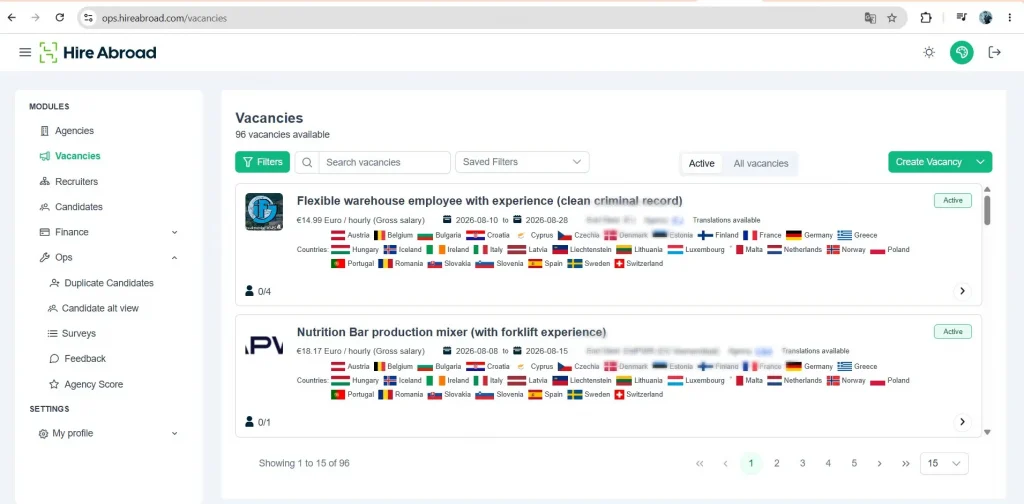
For instance, platforms like Hire Abroad operate as an external B2B international recruitment and blue-collar workforce marketplace. Instead of reallocating existing corporate staff, Hire Abroad bridges a completely different gap: it connects major Western European employers (in countries like the Netherlands, Germany, and Belgium) with a specialized network of freelance recruiters, agencies, and blue-collar job seekers.
How This Model Differs from Corporate Talent Platforms
| Feature | Internal Talent Marketplace (e.g., Gloat) | External Blue-Collar Platform |
| Primary Goal | Retain, upskill, and reallocate existing corporate employees. | Source, vet, and place cross-border blue-collar talent rapidly. |
| Target Audience | Enterprise staff, HR teams, and internal project managers. | Employers, independent freelance recruiters, and trade workers. |
| Core Focus | Internal career pathing, micro-gigs, and breaking down office silos. | Logistics, manufacturing, construction placement, and back-office compliance. |
Unlocking Cross-Border Labor Through a Decentralized Model
Traditional talent marketplace software often fails to address the pace of international blue-collar recruitment. Neither jobs and people will wait, and the complexity of most corporate SaaS tools were never designed for speed. Talent marketplace platforms such as Hire Abroad step in as purpose-built solutions that serve blue-collar recruiters exclusively
- Empowering Independent Sourcing: Instead of automated internal algorithms to notify desk workers, this platform connects independent recruiters with verified, and active European vacancies from vetted agencies and end-clients. Recruiters then can tap into their own talent pools, social networks and messaging channels to source talent either for high-volume roles or technical openings.
- Streamlining the Logistics of EU-Wide Hiring: Cross-border hiring normally suffers from massive logistical friction, such as compliance, contract management, and vetting certifications across different EU jurisdictions. Hire Abroad has the systems in place that takes care of these back-office hurdles, offering a streamlined pipeline of pre-vetted, high-quality vacancies.
The best way to tap into the EU’s blue-collar workforce marketplace is by bypassing the corporate fluff and mapping out a practical process in which staffing agencies get the talent they need while needed, independent recruiters gain a scalable business model, and trade workers find legitimate, transparent employment.
Sourcing Strategies for Blue-Collar Recruiters: Meeting Workers Where They Are
White-collar inbound sourcing is usually useless for trades, so how can recruiters build a pipeline to fill vacancies? It requires a strong community presence rather than relying only on software to match skills.
1. Tapping into Regional Viber and Messaging Networks
Instant messaging groups have taken over the role of old union halls. In many regions in Europe, WhatsApp and Viber groups are where subcontractors and tradespeople looking for work find vacancies, gigs, or long-term projects.
For recruiters, gaining access to these groups is invaluable for their efforts. In addition to providing immediate, unfiltered access to active talent, these platforms also allow you to create your own workflows, in which you are leading a messaging group, and communicate directly with the people who you place.
2. Cultivating Relationships within Trade Schools
Finding a reliable source of vetted experts is the most difficult challenge of technical recruitment. Experts across the globe agree that one great strategy recruiters can use is partnering with technical schools. Having a good relationship with local trade schools can help you spot young talent who are still honing the skills but aren’t on the market yet. Work directly with instructors to get the most talented youngsters.
Naturally, this also means that you must let the staffing agency know that you aren’t bringing in experts, rather, newcomers who are motivated to learn. This can also be a great opportunity for end-clients to build trust and talent retention, as the new worker will be less likely to leave if they like their work environment, conditions, and colleagues.
3. Active Presence in Facebook Groups
Posting generic vacancies on overcrowded job boards usually leaves you with low-quality applicants. To get more out of each vacancy, look for trade-specific or niche Facebook communities. In addition to generating better leads from the start, you can also build your personal brand on the platform.
You can answer technical questions, discuss law changes, share industry insights, and so on. When a vetted vacancy is posted in these environments, it carries more weight because you already have more credibility behind your presence.
The Value of Vetted Vacancies in a Changing Market
In a true blue-collar workforce marketplace, trust is the best thing you can offer. Workers are wary of employer ghosting, fake jobs, vague wage descriptions, and unverified agencies. On the other hand, small business recruiters and agencies are exhausted by unqualified applicants who lack basic certifications or reliable transportation to job sites.
A platform that focuses on vetted and high-quality vacancies changes the game for both sides:
- For the Worker: Clear transparency on hourly rates, allowances, travel expectations, and project duration. Knowing that a vacancy on a platform comes from a verified agency removes the guesswork and risk of taking on freelance or contract gigs.
- For the Recruiter & Agency: Pre-screened talent pools mean fewer dropped shifts, lower turnover on job sites, and faster deployment. When you deal with skilled tradespeople, every day a critical position sits vacant translates to thousands of euros in delayed project costs.

The Future of Blue-Collar Talent Platforms
The evolution of the talent marketplace concept must evolve from the world of white collar. Trades, manufacturing, infrastructure, logistics, and construction are the backbone of the physician economy, and they also deserve a digital infrastructure built for their unique workflows.
By meeting the workers where they are (messaging networks, groups, etc), and using targeted platforms that are built to address the specifics of the blue-collar marketplace, you can build and scale steady recruitment processes with ease.
Meet workers where they are, respect the value of verified offline skills, and utilize targeted ecosystems designed to make blue-collar sourcing transparent, fast, and practical.
Are you ready to introduce your workflows to an entirely new system that strips away the unnecessary headaches and leaves you focusing on recruitment only? Let’s talk to discuss the details.