Hire Abroad January Market Insights: Blue-collar Trends in the Netherlands

 7 min read


Introduction
Welcome to this edition of Hire Abroad Market Insights. In this January report, we take a close look at the changing world of blue-collar hiring in the Netherlands and across the European Union.
As labor shortages reach record highs in essential industries, recruiters face a complex landscape. We will explore how new Dutch government rules are making hiring stricter to protect workers, while at the same time, new EU laws are trying to make it simpler and faster for people to move between countries for work.
We also dive into the Dutch Cabinet’s new plans to raise wages and improve standards in the logistics and construction sectors. From the growing demand for flexible staff to the critical need for warehouse workers and drivers, we cover the ten most important news stories you need to know. This guide will help you stay compliant, keep your candidates happy, and find success in the 2026 season.
Monthly Digest: Most Relevant News For Our Partners
1. Our Commitment to Compliance: Navigating Stricter Labor Migration Rules
The Dutch government is introducing new regulations to ensure fairer working conditions and better integration for international talent. While these rules tighten oversight, they are a positive step toward preventing the abuse of temporary programs. This move is designed to prevent abuse of temporary migration programs while still addressing sectoral labor shortages. Employers must now adhere to stricter oversight mechanisms when recruiting from abroad.
For our partners, this emphasises that staying compliant with evolving Dutch procedures is no longer optional but a competitive advantage. We are here to help you align with both local and EU-level mobility standards.
2. Easier Hiring Across Borders: The New EU Mobility Directive
We are closely following a major new directive from the European Commission designed to make labor mobility smoother across EU member states. By simplifying paperwork, this reform makes legal employment more transparent.
This directive opens doors to a wider talent pool within Europe while reducing the “red tape” that often slows down placements. It ensures equal treatment and fair standards, making cross-border staffing more reliable for everyone involved. This step is expected to boost cross-border staffing and address shortages in interconnected EU economies.
3. Raising the Bar: Action Plan for Better Working Conditions
The Dutch government has launched an action plan to improve wages and conditions in sectors like logistics and construction. This move aims to protect workers in the industries where many of our candidates are placed. This trend represents a continuation of government efforts to balance competitiveness with worker protection.
In the current market, candidate satisfaction is a driver of success. That said, the Employer partners who align with these improved labor expectations will see better retention and higher-quality applicants.
4. Addressing Critical Shortages in Key Sectors
Labor unions have highlighted severe staff shortages in construction, logistics, and industrial safety. This confirms that international talent remains the backbone of Dutch industrial output. The union also calls for enhanced worker protections and better recruitment incentives to prevent burnout and turnover.
What does this mean? There is a massive, growing demand for skilled foreign professionals. For recruiters, this is an opportunity to fill essential roles that are currently keeping Dutch operations running.
5. Protecting Worker Rights: EU Regulation Updates
The EU has revised regulations to ensure fair pay, transparent contracts, and protection against discrimination for migrant workers. As mentioned, the initiative aims to ensure fair pay, transparent contracts, and protection against discrimination for labor migrants. This policy is fundamental for agencies connecting international job seekers with European employers.
These updates build trust. By following these consistent EU standards, our partners can operate more efficiently and provide a more secure experience for every job seeker.

6. The Rise of Flexible Blue-Collar Roles
Leading staffing agencies are reporting a significant increase in flexible labor contracts within the technical and manufacturing sectors. Post-pandemic recovery has revived construction and logistics industries, amplifying the need for foreign talent to fill operational gaps.
Employers appear increasingly open to temporary and project-based staffing arrangements. This trend helps our recruiters in connecting global job seekers to short- and medium-term contracts in expanding industries. This may also mean that our recruiters will need to scale their capacities accordingly.
7. Opportunities Amidst Persistent Shortages
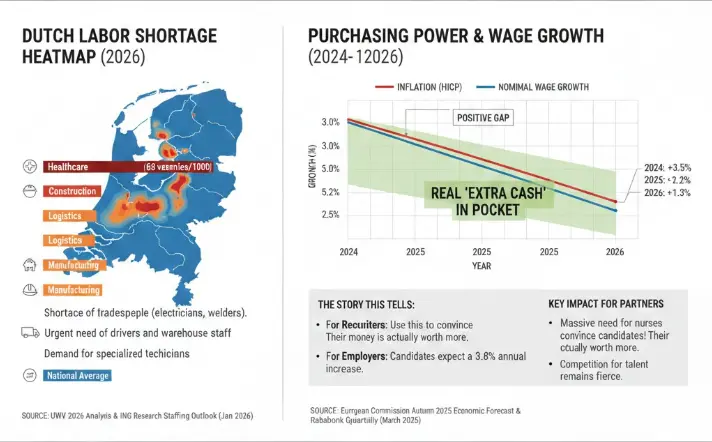
Despite economic growth, the Netherlands still faces a gap in healthcare, technology, and construction workers. All of these sectors rely heavily on skilled migrant workers. This shortage persists even as the broader economy shows resilience and steady employment growth. The ongoing demand for foreign staff presents enormous opportunities for global hiring platforms.
Competition for talent is high. Success now requires better matching, relocation assistance, and visa support—areas where Hire Abroad’s platform provides a distinct edge.
Cutting Red Tape: The Streamlined EU Registration System
The EU is introducing a faster registration and work authorisation process to get foreign talent into open roles more quickly. This system aims to reduce red tape while accelerating legal employment for foreign nationals filling labor gaps.
This shift directly enhances our ability to provide rapid matchmaking. It creates a more unified, reliable workflow for onboarding international talent without the usual administrative delays.
9. Recognising the Value of Migrant Contributions
Recent reports emphasise that migrant workers are essential to the Dutch economy, particularly in agriculture and logistics. It highlights that despite social and administrative challenges, migrant labor continues to underpin the country’s productivity. The report argues for greater policy support to ensure fair treatment, housing, and job security for these workers.
These findings validate the importance of ethical recruitment. Our partners can use this data to advocate for better housing and job security, ensuring that the workers who sustain Dutch productivity are treated with the respect they deserve.
10. Solving the Logistics Recruitment Crisis
The transport and logistics industries are struggling with unfilled roles for drivers and warehouse staff due to surging e-commerce demand. Employers report unfilled roles for drivers, warehouse staff, and operators, leaving supply chains under strain. The demand for foreign workers in these sectors shows no signs of easing, prompting calls for policy reforms to make recruitment smoother.
This market pressure is a major opportunity. By positioning yourself to fill these logistics gaps through international channels, you are solving a strategic problem for the global supply chain.

Keep Up-To-Date With Hire Abroad
The current Dutch labor market is still characterised by a high demand for blue-collar talent, particularly in manufacturing, logistics, and construction. The demand is also high for technical blue-collar talent, especially truck and bus drivers.
While the government and the EU are taking steps to simplify migration and work permit processes , they are simultaneously increasing enforcement to ensure fair treatment and legal compliance within the staffing sector.
For Hire Abroad, this environment presents a significant opportunity to provide high-quality, compliant talent while navigating a landscape of rising wages and evolving migration regulations. Stay tuned for our next month’s roundup.
Want to learn more? Feel free to reach out either as a recruiter or employment agency
News Sources:
- Business.gov.nl – Rules for Highly Skilled Migrants
- Government.nl – National Action Plan on Business & Human Rights
- European Commission – EU Integration Policy
- European Commission – Long-term Residents Directive
- FNV (Federatie Nederlandse Vakbeweging)
- IndustriAll Europe – FNV Wage Demands
- Covebo – Mechanical & Technical Job Demand
- DutchNews.nl – Labor Shortage Persistence
- DutchNews.nl – Refugee and Migrant Economic Impact
- EU Transport – The Road Ahead: Rethinking Future Transport Jobs