Becoming a freelance recruiter is one of the most accessible paths to entrepreneurship in 2026. The shift toward remote work and the global talent shortage have created a massive opportunity for anyone wondering how to become an independent recruiter. Not to mention, the labor regulations of the EU has
If you want to be a self-employed recruiter working from a home office or a freelance headhunter moving talent across borders, the steps to success are the similar.
This guide breaks down how to launch your career as a recruitment freelancer and why platforms like Hire Abroad are changing the game for newcomers.
Setting Up Your Business Structure
First thing’s first: before you can start as a freelance recruiter, you need to make the business legitimate and official. That said, having a business structure is your legal foundation. Depending on your location, business model, and local regulations, you may opt for a sole proprietorship (freelance arrangements), limited company (GmbH or BV in Europe).
Beyond registration, don’t overlook the “un-fun” parts of being a recruitment freelancer:
Self-employed tax: Set aside a percentage of every placement fee for the taxman. Managing your own withholdings is crucial to avoid a massive, unexpected bill at the end of the fiscal year. You should consider opening a separate savings account specifically for these funds to ensure you remain compliant with local revenue services.
Insurance for recruiters: Protecting yourself with professional indemnity insurance is vital in case a placement goes wrong. This coverage shields your personal assets if a client claims that your vetting process was negligent or led to financial loss for their company. It also signals to high-end corporate clients that you are a serious professional who operates with a safety net in place.
Business license: Ensure you have the right to operate in your specific region. Some jurisdictions require specific permits for private employment agencies, and failing to secure these can result in heavy fines. Always double-check with your local chamber of commerce to confirm whether your “home office” setup requires a formal municipal or regional registration.
Choosing Your Recruitment Model
A recruiter freelance business can operate in several ways. You need to decide how you will charge for your time and expertise:
Contingency Recruiting: The “no cure, no pay” model. You get paid only when a candidate is hired. This is the most common entry point for newcomers because it is easy to sell to employers who have nothing to lose by letting you try. However, it requires you to work quickly and efficiently, as you are essentially competing against the clock and other recruiters to find the winning candidate.
Retained Search: The client pays an upfront fee to secure your exclusive time for executive search or high-level roles. This model provides more financial security and allows you to dive deep into a search without the fear of a competitor beating you to the punch. It is usually reserved for senior-level placements where the client needs a guaranteed result and a highly personalized vetting process.
RaaS (Recruitment as a Service): A modern subscription model where clients pay a monthly fee for ongoing talent acquisition support. This is ideal for fast-growing companies that don’t have an internal HR team and need a consistent “outsourced” recruiter to manage their hiring pipeline. It creates a predictable, recurring income stream for your agency, allowing you to move away from the “feast or famine” cycle of traditional headhunting.
Contract Staffing: Placing workers on a temporary basis and taking a margin on their hourly rate. In this model, you remain responsible for the worker’s ongoing administration, but you earn a steady “spread” for every hour they work. It is a fantastic way to build long-term business value, as a large pool of contractors can provide a stable monthly revenue that lasts for years.

Building Your Technology Stack
In 2026, freelance recruiters are only as good as their tools. You don’t need an office, but you do need a digital headquarters and a few pieces of software that will help you keep track of your pipeline, placements, hires, and payments.
Applicant Tracking System (ATS) & CRM: Tools to track your talent pipeline and manage client relationships. These platforms act as your central database, ensuring you never lose track of a high-quality candidate or an important follow-up with a hiring manager. By keeping your data organized, you can quickly revisit past applicants for new roles, significantly cutting down your future sourcing time.
LinkedIn Recruiter: Still the gold standard for social recruiting. It provides advanced filtering options that allow you to pinpoint the exact skills, locations, and seniority levels required for niche roles. Having this tool at your disposal signals to clients that you have access to the same high-level talent pools as the world’s largest recruitment firms.
AI Screening: Use automation software to handle CV screening so you can focus on the human side of the job. These tools can scan hundreds of applications in seconds to identify the top 5% that actually match your job description, saving you hours of manual labor. This allows you to spend your energy where it matters most: building genuine relationships and conducting deep-dive interviews with the best talent.
Master Sourcing and Candidate Management
To succeed in freelance recruitment within the industrial and construction sectors, you must find the skilled hands that others can’t. This requires mastering specialized sourcing channels that go beyond traditional white-collar platforms. Instead of just browsing LinkedIn, a successful recruitment freelancer uses specialised trade forums, Facebook groups for European welders, or localised job portals in high-supply regions like Poland, Portugal, or Romania.
Once you locate these workers, the candidate experience is what sets you apart. A professional freelance job recruiter in the blue-collar space handles:
Technical Vetting: Ensuring the candidate actually has the skills they claim. In the blue-collar world, this means verifying specific certifications like TIG/MIG welding stamps, heavy machinery licenses, or NEN 3140 electrical safety certificates.
Behavioral Interviewing: Checking for cultural fit. Beyond physical skills, you must determine if the worker is prepared for the reality of living and working in a new country.
Reference Checks: Verifying past performance before the placement guarantee period begins. Speaking directly with previous site managers or foremen, if possible, is the best way to confirm a worker’s reliability and “smart working hands.”

Compliance, Legal, and Client Acquisition
Running a freelance recruitment business often feels like being a one-person legal department, and it is a massive hurdle for many. You must navigate the minefield of GDPR compliance for data privacy, keep up with shifting employment laws, and verify complex right to work checks for international candidates. Without a service level agreement (SLA) and a clear recruitment contract, a single misunderstanding can derail your entire business.
On top of the legal stress, you have to master the “sales hustle.” Business development, from cold calling to hosting client discovery calls, takes up the time you’d rather spend actually recruiting.
This is where Hire Abroad changes everything. We take out the guesswork and the heavy paperwork by providing pre-negotiated contracts and verified vacancies. Instead of drafting legal documents or chasing new clients, you can plug into our existing infrastructure, knowing the compliance and business development are already handled for you.
Why Hire Abroad is the Ultimate Shortcut
Starting from scratch as a recruitment freelancer is daunting. You have to find the clients, negotiate the recruitment fees, and then find the candidates. Hire Abroad removes the hardest parts of the equation: lead generation and bureaucracy.
Instant Vacancies: Instead of spending months on cold outreach to find clients, Hire Abroad gives you immediate access to thousands of open roles from verified employers in the Netherlands, Belgium, and Germany. This allows you to skip the “sales” phase entirely and start earning from day one by focusing on high-demand, blue-collar roles.
Focus on Sourcing: We handle the SLA negotiations and the administrative heavy lifting. You can focus entirely on freelance headhunting and finding the best talent, while we ensure the contracts and terms are favorable and compliant with local labor laws.
Professional Branding: Joining a reputable marketplace helps you build your personal branding and portfolio through successful placements, even if you are a newcomer. You get to leverage the reputation of an established international platform to win the trust of candidates who might otherwise be wary of a solo freelancer.
Simplified Finance: No more chasing invoices or worrying about non-payment. We ensure your recruitment fees are processed efficiently and paid out on time, helping you maintain a healthy cash flow so you can reinvest in your growing business.
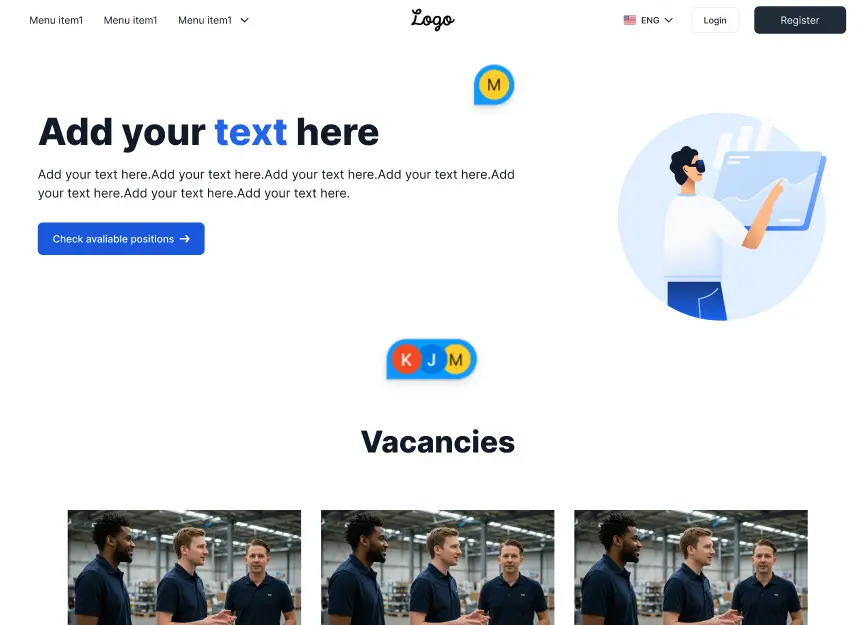
Personal Website Integration: Having your own professional corner on the web is vital, but you don’t need to build a complex job board from scratch. Through us, you can get your personal website and use it as a high-conversion landing page to showcase your niche specialisation and direct candidates to your Hire Abroad-backed opportunities, giving you the look of a large-scale agency with the overhead of a freelancer.

While not freelancers anymore, the Work Away Network is a great example of how dedication and readiness can help you grow. Nuño Costa and Vânia Correia started as candidates themselves, bringing unmatched empathy and dedication to the recruitment process.
Their commitment to recruitment led them to tremendous success. They’ve grown their team to a seven-member agency, and last year alone, they delivered close to 500 new hires.
“We’ve been working together for three years now, and this collaboration has truly transformed our business. Hire Abroad provides an exceptional platform and a professional structure that has allowed our network to grow significantly.
Together, we’ve placed hundreds of candidates and solved every challenge in a quick, professional manner. Being able to count on such a dedicated team of planners to make things happen every day is a real game-changer for us. Over the years, we’ve built a foundation of genuine trust, and we are fully committed to delivering even more results and growing our businesses together. I’m incredibly excited for what’s next!”
Final Thoughts: How to Become a Freelance Recruiter Today
The path to becoming a self-employed recruiter is no longer about who you know in a local city. It’s about how well you can navigate the global market. By focusing on a niche specialization, leveraging a modern technology stack, and using platforms like Hire Abroad, you can turn a laptop and an internet connection into a thriving international business.
Ready to start your journey as an independent recruiter? Join Hire Abroad for free today and get instant access to the roles that will launch your career.